

Rural homes on private wells often deal with sediment, iron, sulfur odor, hard water, bacteria, or nitrate concerns. The right fix depends on the actual water problem, which is why testing comes before choosing any treatment system.
Key Takeaways:
- Private wells need regular water testing
- Sediment can clog plumbing and fixtures
- Iron often causes orange staining
- Sulfur can create rotten egg odor
- Nitrates may be linked to runoff
- Bacteria risks rise after flooding
- Clear water is not always safe
- Different issues need different treatment methods
Why Rural Well Water Can Be Different

Private wells are shaped by local conditions. Two homes in the same town can have very different water because depth, geology, rainfall, drainage, and nearby land use all play a role.
In rural areas, that often means homeowners have to think about more than just taste or clarity. Water may carry minerals, sediment, nuisance odors, or contaminants that are not obvious without testing.
Common factors that affect rural well water
- Soil and bedrock composition
- Well depth and construction quality
- Heavy rain, flooding, or drought
- Nearby farms, septic systems, or runoff
- Age of plumbing and pressure equipment
The Most Common Well Water Problems
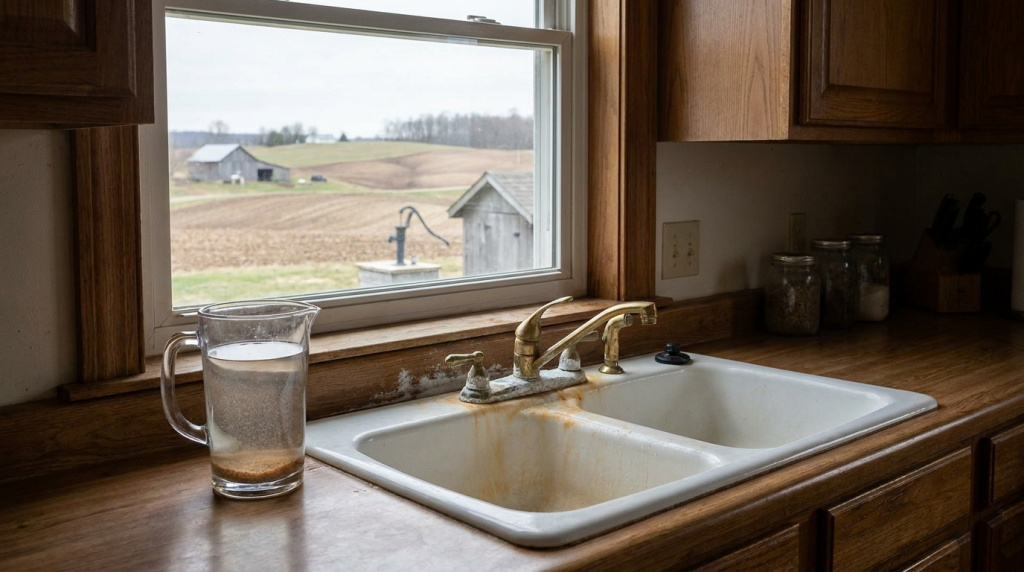
Some well water issues are mostly aesthetic. Others can affect plumbing, appliances, and drinking water safety. The key is knowing which type of problem you are dealing with.
| Issue | What homeowners often notice | Why it matters |
|---|---|---|
| Sediment | Cloudy water, grit, clogged fixtures | Can wear down plumbing and appliances |
| Iron | Orange or brown staining | Stains sinks, tubs, and laundry |
| Sulfur | Rotten egg smell | Makes water unpleasant to use |
| Hard water | Scale buildup, soap issues | Can shorten fixture and heater life |
| Bacteria | Often no visible warning | Can create health concerns |
| Nitrates | Usually no taste or odor | May require targeted treatment |
Sediment
Sediment is one of the most common complaints in rural homes. It may show up as sand, silt, rust-colored particles, or cloudy water after heavy rain or changes in groundwater conditions.
Even when it is not a direct health threat, sediment can create a lot of wear inside the home. It can clog aerators, reduce water pressure, scratch valves, and add strain to appliances that use water every day.
Iron and manganese
Iron is often the first issue people recognize because it leaves obvious orange, brown, or reddish staining. Manganese can show up as darker staining, sometimes closer to black. Both are common in well water and can make sinks, toilets, and laundry harder to keep clean.
These minerals may not always be the most dangerous issue in the water, but they are often the most frustrating in daily use.
Sulfur odor
A rotten egg smell usually points people toward sulfur-related problems, often tied to hydrogen sulfide gas or sulfur bacteria. The odor may seem worse in hot water, which can make the problem feel larger than it first appears.
While the smell is the main complaint, sulfur issues can also make water less pleasant for showering, washing dishes, and general household use.
Some Risks Are Less Obvious
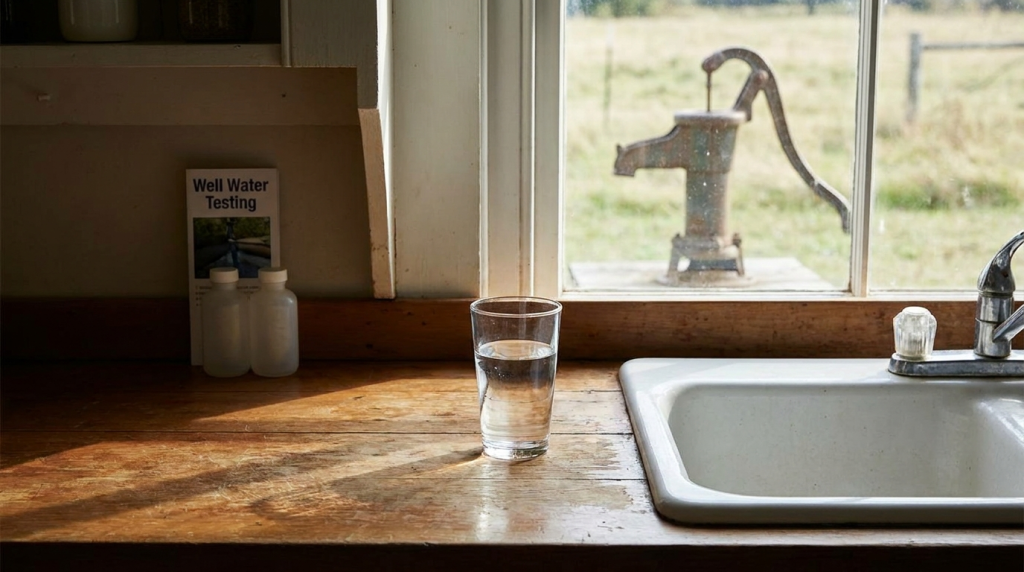
Not every water problem announces itself with staining or odor. Some of the more serious concerns are easy to miss if a homeowner relies only on taste, smell, or appearance.
Bacteria and microbial contamination
Bacteria can enter a private well through surface intrusion, poor sealing, flooding, or other structural problems. In some cases, the water may still look clear and normal.
That is one reason routine testing matters. A well can appear fine while still carrying contamination that requires attention.
Nitrates and runoff concerns
In agricultural areas, nitrate concerns often come up because of fertilizer use, manure, drainage patterns, and shallow groundwater influence. This is one of the clearest examples of why rural water quality cannot be judged by appearance alone.
Unlike sulfur or iron, nitrate issues do not usually announce themselves with taste, smell, or visible particles. That makes testing even more important.
Weather and Land Use Can Change the Picture
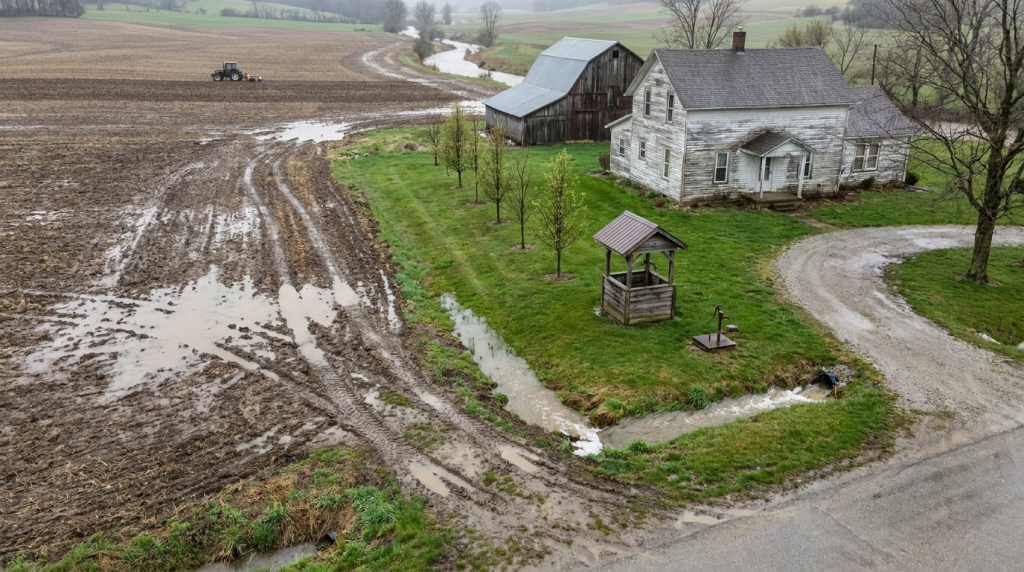
Well water is not always static. Seasonal shifts and property-level conditions can change what shows up at the tap. A home may have relatively stable water for months, then notice new odor, cloudiness, or testing changes after storms or long dry periods.
Situations that can affect well water quality
- Heavy rain and surface runoff
- Flooding near the well area
- Drought and groundwater shifts
- Nearby farming activity
- Septic system issues
- Changes in plumbing or pressure equipment
This is why a single assumption like “my well water has always been fine” can be misleading. Conditions change, and water quality can change with them.
Testing Comes Before Treatment
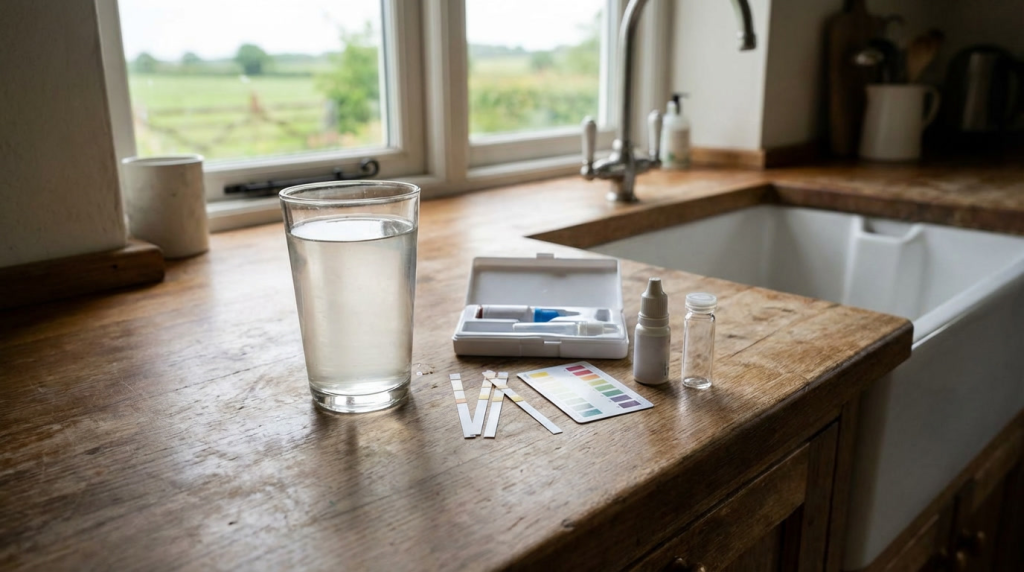
The biggest mistake well owners make is treating symptoms without confirming the cause. Orange staining might point to iron, but cloudy water could be sediment, corrosion, or something else entirely. Bad odor might suggest sulfur, but there may be more going on.
Testing helps separate nuisance issues from more serious concerns. It also prevents homeowners from buying a system that solves one problem while ignoring the one that matters more.
Why testing matters
- Clear water can still contain contaminants
- One symptom can have multiple causes
- Not every home needs the same setup
- The right treatment depends on the water profile
Because private wells can change over time, the CDC recommends regular well water testing before homeowners make treatment decisions.
Different Problems Need Different Solutions
There is no single treatment system that fits every rural well. Sediment issues, hard water, sulfur odor, iron staining, and microbial concerns often require different approaches or a combination of equipment.
That is why homeowners usually get better results when they match treatment to the actual test results instead of buying based on general claims alone. For a more detailed look at well water treatment options, see this guide.
Examples of common treatment categories
- Sediment filtration for sand, silt, and particulates
- Iron or sulfur treatment for staining and odor
- Water softening for hardness and scale
- Disinfection methods for bacteria concerns
- Point-of-use treatment for specific drinking water issues
Final Thoughts
Rural well water can be excellent, but it is rarely a set-it-and-forget-it part of the home. Sediment, minerals, odor, runoff, and bacteria risks all depend on local conditions, and some of the most important issues are not visible at all.
The good news is that most well water problems are manageable once they are properly identified. Testing first, then choosing treatment based on the actual issue, is usually the smartest path for long-term water quality and fewer surprises.
Leave a Reply